
KK Series Column Protection System
A frame system that protects a building's structural columns from vehicle impact. A post at each corner of the column and a rail linking them surround the column on all four sides, taking the impact energy before it reaches the column.
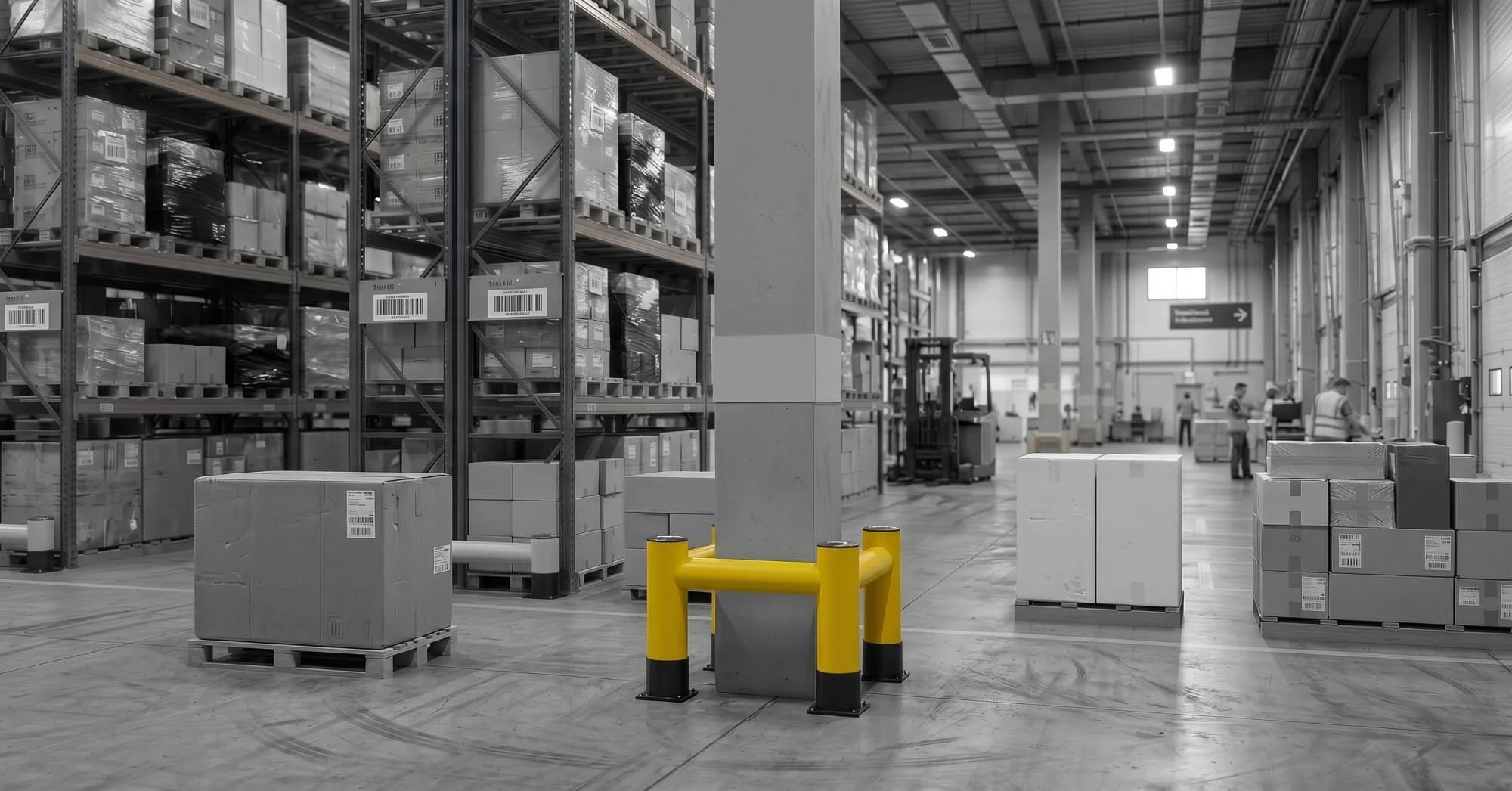
Protection on four sides
A post at every corner and a rail that surrounds the column completely, so impact never reaches it from any direction.
Frame close to the column
A compact layout that takes little aisle space and does not narrow the passage.
Flexible recovery
Impact energy is taken by the frame flexing instead of the column; the structure returns to its original shape.
Simple installation
Installed with floor-anchored posts, without heavy equipment.
Applications
Where it's used
Warehouse and factory columns
Car park columns and ramp corners
Loading area columns
Structural members near production lines
Cold store columns
Corners and gateway heads
Engineering Approach
Why it's designed this way
01 — Risk
Column damage is a structural matter
Repeated impact on a structural column is more than surface damage; it is a structural risk. The goal is therefore not to repair the column after damage, but to take the impact before it reaches the column.
02 — Design logic
Whichever direction the vehicle comes from
The direction from which a vehicle will approach a column cannot be known in advance. The frame is therefore built around all four corners of the column, not just two faces; the posts at the corners and the rail between them form a protection that surrounds the column.
03 — Placement
Close to the column, but not touching it
A flexible structure works by flexing on impact; if it rests against the column, it passes part of the energy straight back to it. The frame is built close to the column but not touching it, and without taking more aisle width than necessary.
04 — Our approach
A column-specific decision, not a standard part
Frame size and rail height are settled after measuring the column section, the surrounding passage width and the vehicle type, through our same 5-step engineering process (design, calculation, procurement, installation, commissioning).